Learn Italian for Free: CLICI for International Students

Learn Italian for Free: CLICI for International Students

The CLICI – Center for Italian Language and Culture of University of Rome Tor Vergata offers  Italian Language and Culture Courses for foreign students enrolled at the University as well as for external participants. 

 Course Schedule
• 1st semester: October 13 – December 19, 2025
• 2nd semester: mid-March – May 2026 

‍ Course Delivery Methods
Courses are held in person and/or online, depending on classroom availability and the number of enrolled students.
Course structure:
• 40 hours of classroom lessons (2 lessons per week, 2 hours each, either via Zoom or in person in the classroom)
• 20 hours of asynchronous online activities Total: 60 hours 

 A few days before the start of the lessons, enrolled students will receive via email:
• Confirmation of course activation
• Mode of attendance (online/in person)
• Days and times of the lessons 

 Registration – 1st Semester 

 You can register for 1st semester courses from July 21, 2025, to September 8, 2025 

To register, choose your category: 

 Internal international students (enrolled at Tor Vergata) (Erasmus students, PhD candidates, Bachelor’s/Master’s students, etc.)
 Go to the guide for internal students 

Professors/Researchers/TAB staff of Tor Vergata University
 Go to the guide
(After registration, send a copy of the documentation proving your affiliation with Tor Vergata to: info.linguaitaliana@uniroma2.it

 External students (not enrolled at Tor Vergata)
 Go to the guide for external participants 

 Class Schedule
Information regarding:

  • Class times
    • Classrooms (for in-person courses)
    • Zoom links (for online courses) 

will be communicated via email a few days before the start of the courses.
Class changes will not be allowed unless decided by the teacher for strictly academic reasons. 

 Contact and Support

Information: http://clici.uniroma2.it/en/courses/courses-in-italian-language-for-tor-vergata-foreign-students/
For more information, please visit our official website or contact us via email: info.linguaitaliana@uniroma2.it 

Registration: http://clici.uniroma2.it/en/registration/

Deadlines 29 October Graduation

Deadlines 29 October Graduation

A.Y. 2023/2024

By Wednesday, 9 October 2024

The submission of the graduation application is now possible through your personal Delphi platform. The application must be submitted to the Student Secretariat in person no later than Wednesday, 9 October 2024.

 The following documents need to be submitted to the Science Student Secretariat:

  1. Signed graduation application form
  2. University Green Book, if available
  3. payment receipt
  4. Thesis assignment, signed by the supervisor and the student (it can be download from Delphi while processing your graduation application)

(Note: in case of discrepancy between the title on the graduation application and the one on the thesis assignment form, the latter will prevail).

by Monday, October 14th  2024

The graduating student must hand in the following documents to the DIDACTIC SECRETARIAT OFFICE (Magdalena Acuna):

1) White booklet of optional courses/seminars (filled in with all CFUs)

2) Internship certificate (signed by the professional tutor)

By Monday, 21 October 2024

 Students are required to upload their dissertation from their personal Delphi platform no later than 8 days prior to the graduation date.

If you wish to cancel the session for which the application was submitted, you must cancel it from your menu on Delphi and immediately notify the Student Secretariat by email: segreteria-studenti@scienze.uniroma2.it.

Copertina internazionale per la dieta che può contrastare i fattori di rischio della salute

Copertina internazionale per la dieta che può contrastare i fattori di rischio della salute

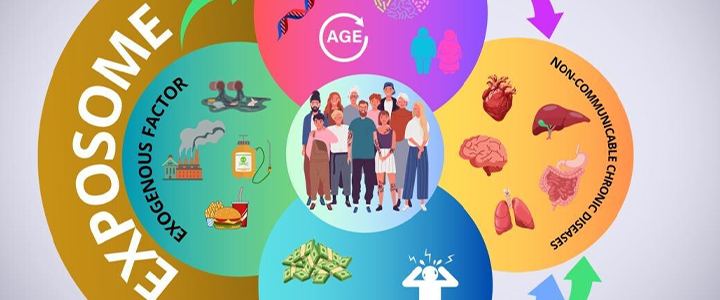
Siamo continuamente esposti a una serie di fattori biologici, chimici, fisici, ma anche psicologici, relazionali e socio-economici, con cui dobbiamo confrontarci nel quotidiano.  Fattori ambientali come l’inquinamento atmosferico, le origini genetiche e lo status socio-economico contribuiscono in modo significativo alle malattie metaboliche, cardiovascolari e neurodegenerative, all’infertilità e al cancro. Anche il microbiota intestinale, fortemente influenzato dalla dieta, svolge un ruolo cruciale. Metodi avanzati misurano i contaminanti, ma spesso trascurano il rischio cumulativo di più sostanze chimiche. Un approccio One Health che consideri la salute umana, animale e ambientale è essenziale per prevenire e gestire efficacemente le malattie croniche non trasmissibili. 

Questo, in sintesi, l’abstract dello studio pubblicato sulla copertina dello special issue della rivista internazionale Diseases del lavoro di un team di ricercatori italiani coordinato da Antonino De Lorenzo, ordinario e direttore del dipartimento di Biomedicina e prevenzione dell’università di Roma Tor Vergata e che vede come prima firma Laura Di Renzo, ordinaria di Scienze tecniche dietetiche applicate del medesimo dipartimento, che così commenta: “L’infiammazione persistente di basso grado è un fattore chiave nelle malattie croniche non trasmissibili (NCD) come obesità, disturbi cardiometabolici, cancro, malattie respiratorie, condizioni autoimmuni e depressione. Queste malattie sono influenzate dal fumo, da diete non sane, dall’inattività fisica e dall’abuso di alcol, tutti modellati da fattori genetici, ambientali e sociali. I modelli dietetici, in particolare gli alimenti ultra-processati, possono esacerbare l’infiammazione e alterare il microbiota intestinale. Lo studio pubblicato analizza il ruolo dell’esposoma (l’insieme dei fattori ambientali e degli agenti patogeni ai quali ciascun individuo è esposto nel corso della sua vita dalla nascita) nella prevenzione, nello sviluppo e nella progressione delle malattie non trasmissibili, concentrandosi sui fattori endogeni ed esogeni”.

“Gli inquinanti ambientali – prosegue – noti come interferenti endocrini, tra cui plastica e pesticidi, pongono rischi significativi per la salute interrompendo i sistemi ormonali, causando potenzialmente disturbi dello sviluppo, riproduttivi, metabolici e neurocomportamentali. Queste sostanze chimiche si accumulano nell’ambiente e nel corpo umano, influenzando la salute di generazioni in generazioni attraverso varie vie di esposizione. Gli inquinanti ambientali, in particolare gli interferenti endocrini, influiscono sulla fertilità maschile e aumentano il rischio di cancro ai testicoli, ma la dieta mediterranea, ricca di antiossidanti come i flavonoidi (ad esempio rutina, quercetina), potrebbe attenuare questi effetti combattendo lo stress“.

Gli ambienti urbani contribuiscono in modo significativo all’inquinamento atmosferico, esacerbando le malattie non trasmissibili come le malattie cardiovascolari e il diabete. “Le strategie di mitigazione – sottolinea Di Renzo – includono riforme della pianificazione urbana, barriere antirumore e riduzione dell’esposizione sia al rumore dei trasporti che all’inquinamento luminoso per alleviare i rischi per la salute associati a livello globale. L’asma infantile, una condizione cronica diffusa, deriva da interazioni complesse tra fattori genetici, epigenetici e ambientali, tra cui esposizioni prenatali e nella prima infanzia come fumo di tabacco, inquinanti atmosferici e modelli alimentari. Esiste un potenziale ruolo protettivo del consumo materno di alimenti specifici (ad esempio, verdure verdi cotte), dell’assunzione di acidi grassi omega-3 durante la gravidanza e dell’aderenza alla già citata Dieta Mediterranea”.
L’obesità, una crisi globale esacerbata dall’inquinamento atmosferico, in particolare dal particolato PM 2.5, ha un impatto diverso sulla salute tra i sessi a causa di disturbi endocrini e interazioni con gli ormoni sessuali. “Comprendere queste disparità e i loro meccanismi sottostanti – conclude – è fondamentale per strategie di prevenzione mirate volte a mitigare i rischi di obesità associati a fattori ambientali”.

Questi sono solo alcuni degli esempi riportati nello studio che ci premettono di comprendere come solo conoscendo i determinati delle malattie, intesi come tutti i componenti dell’esposoma, sia possibile pianificare interventi di prevenzione e terapie mirate di precisione.

Admission test: Identification procedures in alphabetical order

Admission test: Identification procedures in alphabetical order

ADMISSION TEST: SEPTEMBER 6, 2024

Written Test: 60 questions (multiple choice).

Identification on the ground floor 08:30 am START: 09:30 am

TIME: 90 MINUTES

Oral Test English language: START: 2.30 pm

ALPHABETICAL ORDER

ROOMALPHABETICAL ORDER
1From ABDOLLAHISANI to JAFARI
2From JAHARA to ZOHDI MOTALEBPOUR

 DOCUMENTS for written test for all candidates:

must show the valid identification document/ passport already loaded during registration for the selection on Delphi and receipt of payment of the bulletin of € 30.00.
Non -EU candidates legally residing in Italy: must also submit photocopies of the valid residence permit; if expired, submit photocopies of the expired permit and of the renewal application.

Non-EU applicants residing abroad applying for a visa for study:  must submit photocopies of the application submitted on Universitaly.

IT IS NOT ALLOWED TO:

1. Bring bags, briefcases, cell phones, smartphones, notes, manuscripts, books or publications into the classroom. Any other material is equally prohibited

2. Communicate with each other or communicate with others.

IT IS ALLOWED:

  1. The use of scientific calculators as long as they do not require an electrical or wireless connection.

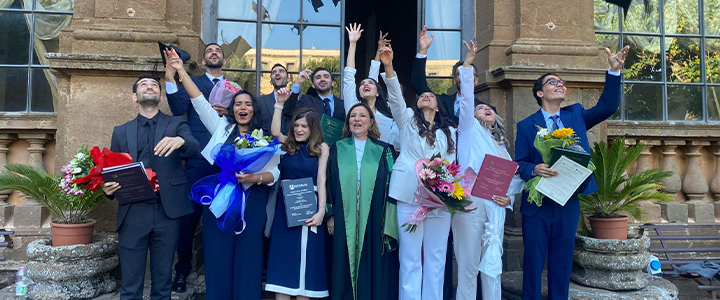
Promise A. Adekola the youngest Masters in Pharmacy Degree Course

Promise A. Adekola  the youngest Masters in Pharmacy Degree Course

“My name is Promise Ayomide Adekola, I was born on the 1st of April 2003 into the family of Mr. Adekola Adetomiwa Adedokun and Mrs. Adekola Titilayo Funmilayo. I hail from the western part of Nigeria, Ogbomoso from Oyo State in Nigeria.
I started my nursery education at age 2 in Stella Maris Schools Abuja and at the age of 4, I was admitted into primary education at Glisten International Academy Abuja. I was encouraged to enrol for the common entrance examinations from Primary five which was a success and I advanced into secondary education in the same school at age 9. While in Secondary school, I continued on the path of hard-work and diligence which resulted to receiving an award of a full tuition waiver for part of my education. In 2017 at age 14, I was admitted into Cyprus International University to study Pharmacy (PharmD), and due to my excellent performance, I became a beneficiary of the school Scholarship program. During the course of my education, I engaged in the Dual Degree Program (MPharm) organized by Cyprus International University and University of Rome Tor Vergata.

In 2020, three years after my education in Cyprus I transferred to University of Rome Tor Vergata based on the dual degree program to complete the last 2 years of my education in pharmacy. At the age of 19 I have successfully completed my One Cycle degree course in Pharmacy (MPharm) with a total score of 106 out of 110 with a thesis titled: Microneedles in drug deliveries and their possible use in vaccine administration supervised by Prof. Franco Alhaique.
I plan to proceed in completing my 1 year PharmD program in Cyprus and pursue a PhD afterwards.
This Journey was not easy and had many obstacles but I give God the glory for bringing me thus far and helping me in successfully getting this degree.
I want to appreciate my amazing parents for their wonderful support and thank my Pastor, my brothers and sisters for their encouragements, support, and prayers. Surely with God, hardi work, and consistency, success is inevitable.”

Career Opportunities – Malta Medicines Authority

Career Opportunities – Malta Medicines Authority

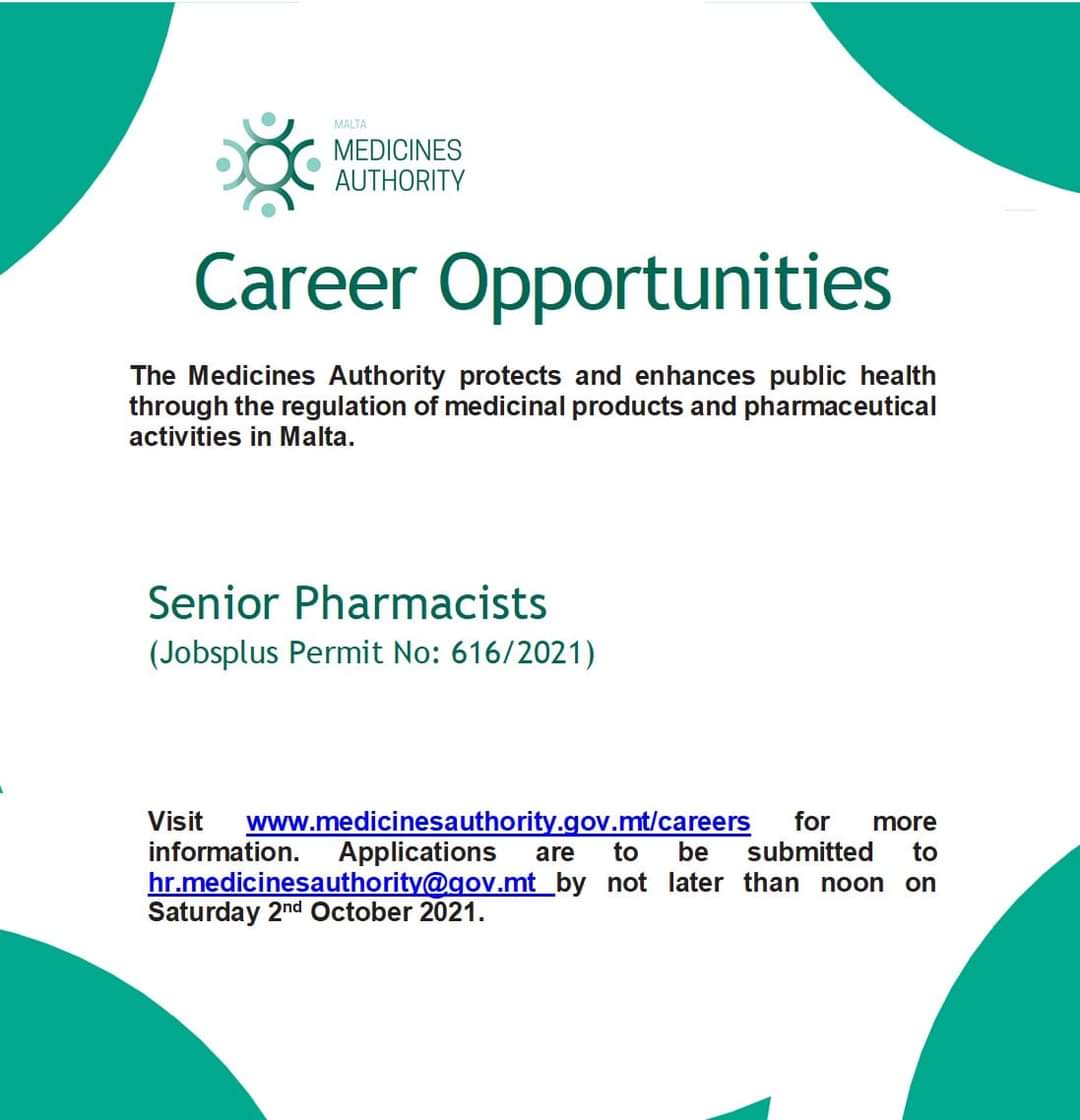
The Medicines Authority invites applications for the Post of Senior Pharmacist within the Authority.

Terms and Conditions

 The selected candidate will be employed as a Senior Pharmacist Grade BI, according to the Medicines Authority Collective Agreement.

The Post of Senior Pharmacist is subject to a probationary period of twelve (12) months.

For information and application: 

http://www.medicinesauthority.gov.mt/seniorpharmacist2021


Exam Prof. Barbato, 8067491 Drug Analysis, for the II year, module 2

Exam Prof. Barbato, 8067491 Drug Analysis, for the II year, module 2

The mod. 2 (prof. Gaetano Barbato) of the exam 8067491 Drug Analysis II year, to be held the 23/09 and the 6/10 will be on Teams in REMOTE for all the students.

The written tests will be held in conformity with the modality explained in the instruction file attached:
“Instruction file for the exam code 8067491 drug analysis exam II year, Mod. 2 prof. Barbato.pdf”

Read carefully the instructions, and set-up the camera display as explained in the instruction file.
Failure to accomplish the set-up will determine exclusion from the remote exam.

Note there’s a MANDATORY preliminary check of your set-up to be held by:

September 20th at 15.00 for the exam session of 23/09,

October 1st at 15:00 for the exam session of 6/10.

DEADLINES and how to reserve the exam:

Session of the 23/09 deadline reservation is September 19 at 24:00.

Session of the 6/10 deadline reservation is September 30 at 24:00.

The exam MUST be reserved on the following Teams channel:
https://teams.microsoft.com/l/channel/19%3a8e2b8d31fe4c4df998cfdb9961ecdddb%40thread.tacv2/Barbato%2520exam%2520mod.%25202?groupId=450bd510-f12d-4993-bd00-24b2482d5824&tenantId=24c5be2a-d764-40c5-9975-82d08ae47d0e

In the dedicated chat space, writing your surname, name, matricola.
Reservation will automatically be done also for the MANDATORY checking session.

If you have questions please send a message to prof. Gaetano Barbato in the Teams chat, do not send e-mails.

Instruction file for the exam code 8067491 

Join Tor Vergata’s Buddy Programme

Join Tor Vergata’s Buddy Programme

The Buddy programme foresees a support and a welcome from the enrolled students to the new students in collaboration with the Welcome Office.

The first months are the most challenging: students need to familiarize with a new academic context, non-resident students with a new city and international students also with a culture and traditions different from their own.


A warm welcome can make the difference

If you want to support a new student in overcoming the same difficulties you might have faced at your arrival, you can apply to become a buddy, who will be an important reference during the first adaption period.

What does a Buddy do

  • He/she contacts the students whom he/she is matched after their arrival
  • He/she participates in cultural events and activities addressed to buddies and new students
  • He/she helps new students become familiar with the campus and its facilities
  • He/she facilitates the understanding of the didactic organization: structure of the academic year, lectures, exams
  • He/she helps students get to know the city and its opportunities
  • He/she addresses the student to the competent offices for specific issues

Why to become a Buddy

  • You will get to know different cultures of the world without moving away from home
  • You will make new friends
  • You will improve your English language knowledge and be able to practice other foreign languages
  • You’ll develop skills and contacts which will turn out to be useful in the job market

Who can apply to become a Buddy

Students regularly registered in the academic year 2020/2021 at  Tor Vergata University of Rome, who will continue their studies at the University of “Tor Vergata” for the a.y. 21/22.

The Buddy will support students enrolled at the first year in the a.y. 2021/2022


How to apply

It is possible to apply by filling out the following online form below (available in Italian and in English)

Duration of the programme

The programme has a duration of four months (based on the opening of enrollments and/or the beginning of the lessons).


Training

The Welcome Office will support you in acquiring the necessary skills to exercise at best your role as a Buddy, will assist you throughout the period in which you will volunteer and will invite you to take part in meetings, games and events (online or in presence) in which you will strengthen your relationship with the new students.

Informative material will be sent by e-mail.
The Buddies will be matched with new students on the basis of the attendance to the same study programme and of personal interests, revealed through the form.

According to the number of applicants, the buddies will be matched with one or more students.


For new students: how to get in contact with a Buddy

If you are a new student and want to get in touch with a Buddy, write to welcome@uniroma2.it indicating your name, surname and your degree course. You will be inserted in the buddy chat of your School in order to receive all the updates.


Contacts

Welcome Office
Tor Vergata University of Rome
E-mail: welcome@uniroma2.it

Admission Test A.Y. 2021-2022 ENGLISH TOLC-F@CASA

Admission Test A.Y. 2021-2022 ENGLISH TOLC-F@CASA

In response to the current emergency situation, starting from May, CISIA will provide ENGLISH TOLC-F@CASA home tests to allow students to take TOLCs remotely for the academic year 2021-2022.
ENGLISH TOLC@-FCASA tests are provided to individual students through the CISIA platform using tools and technology that allow to create secure and controlled virtual classrooms in which candidates can be reliably identified and carry out their tests autonomously. Virtual classrooms are created and managed by universities in collaboration with CISIA. Information and instructions on the equipment required to take ENGLISH TOLC-F@CASA tests can be found on the CISIA website.

What the ENGLISH TOLC-F@CASA is?
The ENGLISH TOLC-F@CASA is an individual test, different for each participant, composed of questions automatically and randomly selected from the CISIA TOLC database with a software developed and managed by CISIA – Consorzio Interuniversitario Sistemi Integrati per l’Accesso.
TheENGLISH TOLC-F@CASA test is carried out on the computer and allows to participate in any selection for which the ENGLISH TOLC-F@CASA is required: it is not necessary, therefore, to support it at the same location of the course of your interest.
Once you have taken the ENGLISH TOLC-F@CASA test, you can apply to one of the intakes of Pharmacy. The selection will be based on the score obtained at the ENGLISH TOLC-F@CASA, weighted according to the criteria set out in the Call for Applications.

The ENGLISH TOLC-F@CASA test structure

The ENGLISH TOLC-F@CASA consists of 50 questions divided into 5 sections. The sections are: Biology, Chemistry, Mathematics, Physics, Logic.

SECTIONS NUMBER OF QUESTIONS TIME AVAILABLE
BIOLOGY: 15 QUESTIONS 20 MINUTES
CHEMISTRY: 15 QUESTIONS 20 MINUTES
MATHEMATICS: 7 QUESTIONS 12 MINUTES
PHYSICS: 7 QUESTIONS 12 MINUTES
LOGICS: 6 QUESTIONS 8 MINUTES
TOTAL: 50 QUESTIONS 1 HOUR AND 12 MINUTES (72 MINUTES)

The result of each ENGLISH TOLC-F@CASA is determined by the number of questions answered correctly, wrong or unanswered which make up the total score as follows: 1 point for each correct answer, 0 points for each unanswered question and a penalty of 0.25 points for each incorrect answer.

For more information: Structure and Syllabus 

How and When to enrol in the ENGLISH TOLC-F@CASA Test
Carefully read the Call for Applications to check the deadlines for registration toENGLISH TOLC-F@CASA and to the intakes.
To register for ENGLISH TOLC-F@CASA you must access the CISIA website, select ENGLISH TOLC-F@CASA,  date and pay the fee of € 30 payable by MAV or credit card.
Check the calendar of English TOLC-F@CASA sessions organized by the University of Rome “Tor Vergata”
– For the Subscription watch this video tutorial

Score
The ENGLISH TOLC-F@CASA score, divided into the various sections, will immediately become visible on the CISIA website at the end of the test, entering with the credentials used for booking. This score must be parameterized with the coefficients for each section that are indicated in the Call for Applications.
At the deadline indicated in the Call for Applications will be published the ranking list based on the scores of the ENGLISH TOLC-F@CASA test “weighted” according to the criteria set out in the Call.

How to enrol in the Degree Programme
Once you have passed the selection process, to enrol in the Degree Programme please consult the “Enrolment & Payment” page and follow the instructions and deadlines set out in the Call for Applications very carefully.

FAQ about TOLC@CASA 

In this page there are more information about TOLC@CASA

TOLC@CASA Instructions

For more information about call for applications:  segreteria@farmacia.uniroma2.it